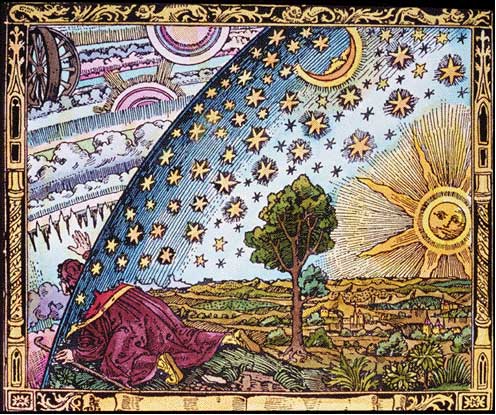
Tonight I gave a talk at the San Francisco dorkbot meeting. It was a great opportunity (thank you, Karen!) and an honor to share the stage with Tim Hunkin. In the talk, I presented a short history of the desktop metaphor as a way of thinking about screen-based user interface design and laid out my thoughts for why magic should be a metaphor for the user experience design of ubiquitous computing. I also presented a number of examples of how it's already happening, but without the explicit use of magic as a metaphor. I end by saying:
So, in conclusion, the age of magic is coming.Chip manufacturers low-power roadmaps and congealing wireless communication standards ensure that there are going to be many more objects like this.
I believe that we need to systematically approach the user experience design of these devices. One way that's been shown to be successful is the adoption of a strong metaphor that can be leveraged to explain the functionality of many of the ideas embedded in a new set of technological tools. I believe that magic as a metaphor is an incredibly rich vein that can be mined for interesting and familiar user experience design tropes. It would be a mistake to pass up the opportunity to use it extensively at this early stage in the proliferation of these devices and ideas.
My slides and notes(630K PDF) have everything I said in them, although where I have mosaics in the PDF, I used animations in the talk.

Thanks for the thoughtful comment. Second Life as an experience prototyping environment is an interesting concept. I haven't spent much time there, and I'm wary of all the hype, but the idea intrigues me. One thought: since people already suspend a lot of their disbelief when entering Second Life, would their reaction to "magical objects" be representative of their reactions to encountering similarly-functioning objects in the real world?
I don't know.
I find your discussion of the magic metaphor provocative and insightful. I'm also glad that I read your talk because, having just encountered the basic concept on the Adaptive Path blog, I was on the way to misinterpreting what you meant. At first, I applied the metaphor to my experiences in Second Life where, thanks to their scripting language and the ability to create objects, "magic" in a sense reigns. It is clear, however, that Second Life is the living embodiment of Magic Cap, a virtual world where you can interact with information as represented in objects and places. While Second Life, especially methaphorically, has a lot of promise, it's reality is a mixed bag (like the Magic Cap product you show).
Of course, you are calling for the opposite and the quote from Marc Weiser points the way: Ubiquitous is the opposite of virtual. Interestingly enough, I think that Second Life offers us a kind of lab for developing enchanted objects. In a world that is thoroughly encoded and designed, we can model and play wth these objects, before introducing them into the non-virtual world. Might SL even give us ideas on precisely those enchanted objects that this life is missing? Let me consult my crystal ball...