The recent interest (thank you Engadget, BoingBoing, Digg, and the rest!) in my recent magic wand prototype led me to think it may be good idea to start making a bibliography of magic as user interface. Adrian McEwen articulates the broader implication of my thoughts well in this blog entry inspired by my wand piece:
[The desktop metaphor] is becoming increasingly stretched, as we need more powerful ways to visualize and manipulate data, and particularly as computing power bleeds out of the PC and into the world around us. With ubiquitous computing making our "intelligent devices" more specialised, the requirement to have their interface conform to a general-purpose workspace such as the desktop becomes less and less desirable.
I agree, obviously, and he said it better (and more succinctly ;-) than I would have. Magic as an alternative UI metaphor has appeared a number of times in HCI writing in the last 20 years, talked-about by many of the greats in the field. Now we can actually implement some of it, I figured it may be useful to go back and see what has been written about it in the past. Here is a list of publications that have talked about magic or enchantment in HCI contexts. It's by no means exhaustive, but it's what I could find in an evening back in April using Google and chatting with Ben and Liz.
- Ballagas, R., Walz, S., and Borchers, J. REXplorer: A Pervasive Spell-Casting Game for Tourists as Social Software. In CHI 2006 Workshop on Mobile Social Software (MoSoSo), April 2006.
- Barton, J., Pierce, J., Quantifying Magic in Ubicomp System Scenarios, Postion Paper, Ubisys 2006 at Ubicomp 2006, September 17-21, 2006
- Bier, E. A., Stone, M. C., Pier, K., Buxton, W., DeRose, T. D., Toolglass and Magic Lenses: The See-Through Interface, SIGGRAPH 93 proceedings, 1993 (the rest of Xerox PARC's Magic Lens papers)
- Binsted, Kim (2000) Sufficiently Advanced Technology: Using Magic to Control the World. Plenary at CHI 2000.
- Center for Tactical Magic, "Magic(k) Calls", Arthur Magazine, October 2006 (8.6MB PDF)
- Cheok, A.D., Nguyen, T.H.D, et al, Magic Land - A Mixed Reality Interactive System Integrating 3D Live Persons, Singapore Mixed Reality Lab, 2004
- Ciger, J., Guiterrez, M, Vexo, F., Thalmann, D., The Magic Wand, Proceedings of the 19th spring conference on Computer graphics, 2003
- Crone, M., Mattsson, J., Eliasson, E., Wiatr, P., Magic Bowl: a Tangible User Interface for Configuration of Interactive Environments, Proceedings of COOP04
- Davis, E., Techgnosis: Myth, Magic + Mysticism in the Age of Information, New York, Harmony Books, 1998
- Doherty, J., Keeling, K., Newholme, T., Fowler, D., McGoldrick, P., Mcaulay, L., Stories, myths and metaphors: Explaining self-exclusion and Internet use in the home, Proceedings of HOIT 2003
- Gross, M.D. and Eisenberg, M. Why Toys Shouldn't Work "Like Magic": Children's Technology and the Values of Construction and Control DIGITEL 2007: The First IEEE International Workshop on Digital Game and Intelligent Toy Enhanced Learning, Jhongli, Taiwan, 2007.
- Hinske, S., Langheinrich, M.: Managing Augmented Toy Environments - A New Perspective for Smart Space Management, Proceedings of 4th International Workshop on Managing Ubiquitous Communications and Services (MUCS), held in association with IM 2007, Munich, Germany, May 2007
- Hulterström, K., Witches, Warlocks and Traffic Encounters: Designing the interaction for an ad hoc multiplayer gaming experience, Master's Thesis, 2003
- Lacucci, G., Kuutti, K. and Ranta, M., On the Move with a Magic Thing: Role Playing in Concept Design of Mobile Services and Devices. In proceedings of DIS 2000, ACM (2000)
- Laurel, B., Computers as Theater, Addison-Wesley, 1993
- Lawler, J., Metaphors we compute by, 1987/1999 (this was also the title of a class I took from Lawler in 1987 at the University of Michigan's Residential College. That class was incredibly influential on my thinking about language, interface and computers. THANK YOU,Prof. Lawler!)
- Levy, S., Interaction through Spells - Establishing traces of Invisible Connections, master's thesis, Stockholm University and Royal Institute of Technology, 2005
- McCarthy, J., Wright, P., Wallace, J., The Experience of Enchantment in Human-Computer Interaction, Proceedings of CHI04, 2004
- Nolan, S., Building magical realms: responses to pervasive and locative media technology, Digital Creativity Journal, pp. 185-192, Volume 17, Number 3, 2006
- Raskin, J., Silicon Superstitions, ACM Queue vol. 1, no. 9 - December/January 2003-2004, 2003
- Rawat, T., Wonder objects: magic and interactive storytelling, Proceedings ISIMD 2005
- Redström, J., Designing Everyday Computational Things, PhD Dissertation, 2001
- Rohrer, T., Metaphors we compute by: bringing magic into interface design, 1995
- Scott, J., UbiComp: Becoming Superhuman, Proceedings of Ubicomp 2005
- Schmitz, M., Baus, J., Schmidt, S., Towards Anthropomorphized Objects: A Novel Interaction Metaphor for Instrumented Spaces, 3rd International Workshop on the Tangible Space Initiative, 2006
- Smith, R., B., Experiences with the alternate reality kit: an example of the tension between literalism and magic, CHI 86 Proceedings
- Smith, W., Lewi, H., Magical Beginnings of the Mundane, International Workshop on Simtech, Melbourne, November 26-27, 2007
- Stern, E., A Touch of Medieval: Narrative, Magic and Computer Technology in Massively Multiplayer Computer Role-Playing Games, Computer Games and Digital Cultures Conference Proceedings, 2002
- Svanaes, D., Verplank, W., In Search of Metaphors for Tangible User Interfaces, Proceedings of DARE2000
- Tabor, P, Crampton-Smith, G., Steiner, Y., Usable Witchery workshop, January 2008
- Tiplady, R., Harry Potter' technology
could be coming your way, BusinessWeek Online, June 9, 2004
- Twist, J., Potter magic charms Nokia chief, BBC, October 28, 2003
- Tognazzini, B. Principles, Techniques and Ethics of Stage Magic and Their Application to Human Interface Design, Proceedings of INTERCHI'93, 24-29 April 1993. ACM: New York. pp355-362.
- van Loenen, E, On the role of Graspable Objects in the Ambient Intelligence Paradigm, Smart Objects Conference SoC 2003, Grenoble, 15-17 May, 2003
- Vinge, V., "True Names" (1981), in True Names: And the Opening of the Cyberspace Frontier, Tor Books, 2001
- Waern, A., Söderberg, J., Akesson, K., Björk, S., Enhanced Reality Live Role Playing, Proceedings of Pervasive 2004
- Walz, S., Ballagas, R., Borchers, J., Mendoza, J., Kratz, S., Wartmann, C., Fuhr, C., Tann, M. J., Shin, D. Y., Hameed, B., Bardos, L., and Hovestadt. L., Cell Spell-Casting: Designing a Locative and Gesture Recognition Multiplayer Smartphone Game for Tourists In Proc. PERGAMES, Third International Workshop on Pervasive Gaming Applications at PERVASIVE 2006, Dublin, Ireland, May 2006.
- West, D., Magic, Proceedings of OOPSLA 2002
- Weston, D., Barney, J.A., US Patent 6761637: Method of game play using RFID tracking device
- Wilson, A., Wireless User Interface Devices for
Connected Intelligent Environments, Ubicomp 2003 Workshop on Multi-Device Interfaces for Ubiquitous Peripheral Interaction, 2003
Please feel free to email me or post additions to this list in the comments. The field is big and "magic" is a common word used to describe all kinds of situations, so I probably missed some big ones.
[UPDATE: Thanks to Eoin Brazil for the David West reference, which in turn references Vernor Vinge's True Names, which I've also included here.]
[6/8/06: I wrote a small addendum to this list]
[10/10/06: Added Levy and Raskin references; thanks Tod and Cassidy!]
[10/19/06: Added Schmitz, et al and Mattsson]
[11/20/06: Added Tiplady and Twist]
[11/22/06: Corrected Tog reference; thanks Chris!]
[11/29/06: Added Balagas, et al, and Walz, et al.]
[12/1/06: Added Davis, though I feel it's not as design focused as I really want to go, but I do want to acknowledge that it was an early hypothesis of role technology plays in a changing society. There are many history and philosophy of science documents that I could cite if I continued down this path, but I'll include them sparingly.]
[12/22/06: I turned off comments because this post is getting too much spam. If you want comment on this, send me email at blog c/o this blog. Thanks.]
[1/3/07: Added Nolan]
[2/9/07: Added Center for Tactical Magic, thanks Jordan!]
[1/8/08: Added Barton, Pierce; Hinske, Langheinrich; Gross,Eisenberg; Smith, Lewi]
[1/12/08: Added Weston, Barney]
[3/30/08: Added Wilson--thanks Jeff!]
[5/9/08: Added Cheok, Nguyen, et al]
[11/16/08: Added Tabor, Crampton-Smith, Steiner]


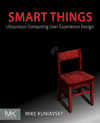

I just came across this: Peter Lamont and Richard Wiseman, "Magic in Theory: An Introduction to the Theoretical and Psychological Elements of Conjuring" ... Wiseman is a psychologist who used to be a conjurer.
Also the Tog ref should be
Toganizzini, B. (1993) "Principles, Techniques and Ethics of Stage Magic and Their Application to Human Interface Design". Proceedings of INTERCHI'93, 24-29 April 1993. ACM: New York. pp355-362.
Cheers,
Chris
Hi Mike,
you may wish to have a look at some of the work of the psychologist and anthropologist Pascal Boyer at Washington University in St Louis:
http://artsci.wustl.edu/~pboyer/PBoyerHomeSite/index.html
Boyer has a series of experiments in which he shows that the 'memorability' of an experience is related to:
a) how different it is to one's present experience;
b) how inferentially rich it is (what follows from it)
As Boyer himself recognizes, a lot of magic is like that: a magic wand is very different from anything else you've seen and you immediately recognize that you can do a zillion things with it.
Best,
Stefano
What a delightful list of publications! I especially love Lawler's "Metaphors We Compute By." And I love Dr. David West's twist on Arthur C. Clarke: "If a technology is not magical it is insufficiently advanced."
Here is another more software than ID / HCI paper on Magic by David West from the Onward track at Oopsla in 2002. It is online pages 42-28.